Book Review: Greek Military Intelligence and the Crescent (Dimitrakis, 2010)
Note: this book review was originally published on Balkanalysis.com in 2012, and republished in 2024 on my Substack newsletter, The Traveler’s Literary Supplicant. Click below link to become a TLS paid subscriber and read the complete review and full archive.
Reviewed by Christopher Deliso
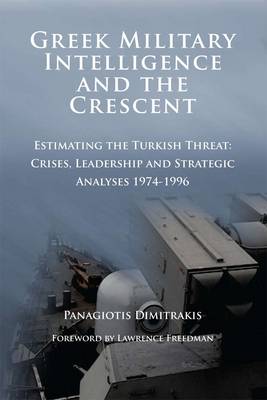
Greek Military Intelligence and the Crescent. Estimating the Turkish Threat- Crises, Leadership and Strategic Analysis, 1974-1996
By Panagiotis Dimitrakis, University of Plymouth Press (2010), 224 pp.
This comparative analytical work discusses two memorable showdowns between Greece and Turkey, events that exemplified both countries’ balance of power and political and military strategic capacities and goals in the late 20th-century. These affairs – the first, a war of words accompanied by military buildups in 1987 and the second, the much more serious Imia/Kardak crisis of January 1996 – occurred in an environment in which some of the same conditions that applied then apply still now.
Analysts will thus find useful insight to help in assessing the Greek-Turkish relationship today. The book is also an engrossing read for the armchair historian or intelligence buff. The vivid recounting of the decision-making processes of Greek leaders, civilian and military intelligence, and the armed forces (particularly the Navy) is peppered with new commentary from former high-level officials active during the period in question, adding extra value.
Introduction
The author, Greek historian Panagiotis Dimitrakis, starts with an introduction discussing themes like ‘key concepts in military intelligence,’ ‘leadership and intelligence’ and ‘intelligence and crisis management.’ This is a rather theoretical approach, but unquestionably it elucidates topics that are crucial to the narrative of both the 1987 and 1996 events, and thus informs the rest of the text.
To continue reading, subscribe to The Traveller’s Literary Supplicant on Substack.